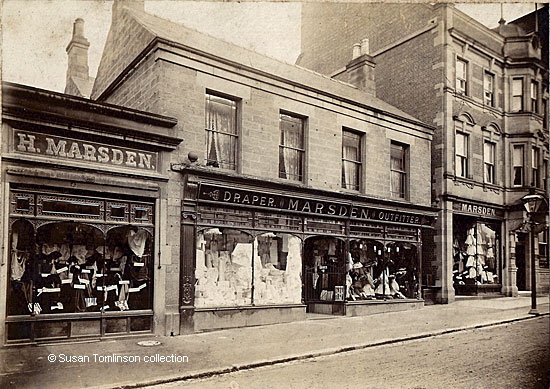
Following the passing of Henry Marsden in 1920, his widow, Elizabeth, faced the daunting reality of maintaining a sprawling, three-storey residence entirely by herself. Between 1920 and 1927, a major shift occurred on the Farley hillside:
Elizabeth ultimately chose to downsize, moving away from the grand estate to settle closer to Matlock’s town centre and her family’s well-established commercial networks. Once the founding family had left he house vacant, the property was leased to short-term residents. During this interwar window, the house essentially operated as a high-end, unlicenced boutique lodging house.
Crucially, this temporary usage left the original Victorian layout completely intact, bridging the gap before its mid-century transformation into the Robertswood Hotel.
The 1927 Transition – Enter the Gregorys:
Because the 1931 UK National Census was completely destroyed by a fire during the Second World War, local historians rely heavily on the 1895–1932 runs of Kelly’s Trade Directories and regional Electoral Registers to track the home’s 1927 transition.
These archives reveal the arrival of another grand Matlock dynasty: The Gregorys were a powerhouse mercantile family in Derbyshire. Famously operating John Gregory & Son Timber Merchants and Saw Mills in nearby Tansley and Darley Dale. As wealthy industrialists whose livelihoods revolved around local forestry and construction timber, it was incredibly fitting for a branch of the Gregory family to take over a grand home nestled directly against the edge of the Farley woods.
On the absolute eve of World War II, the 1939 National Register (compiled on 29 September 1939 to issue identity cards and ration books) confirms that the house on Farley Hill was being run by Lewis Gregory and his family. By this date, the transition was complete. The property is officially listed in the register under its modern name, “Robertswood” cementing the house’s evolution from the Marsden family’s country mansion to the Gregory family’s estate.
While the grand 19-fireplace mansion originally required a small army of staff in the Victorian era, the eve of WWII saw the house managed by Mary Gregory with the assistance of just one live-in domestic servant, 27-year-old Mary Prince.